
















AI Assistants
/
Supply Chain
Build an intelligent, connected supply chain
Streamline the flow of materials, inventory, and information across your supply network. Our Supply Chain AIssist helps enterprises operate with shared visibility, earlier signals, and coordinated execution—at scale.
Faster decision-making across planning and execution
Reduce latency caused by fragmented systems, delayed signals, and manual coordination.
Better alignment across demand, supply, and inventory
Operate with a shared view of priorities across planning, manufacturing, and fulfillment teams.
Earlier visibility into risk and margin exposure
Identify issues sooner—when corrective action is still possible.
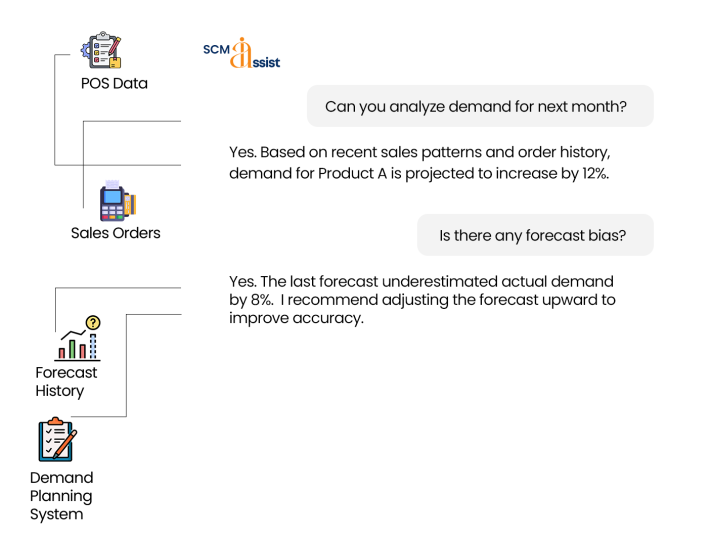
Plan demand with more confidence
- Demand pattern analysis
- Forecast bias detection
- Demand shift monitoring
- Collaborative planning workflows
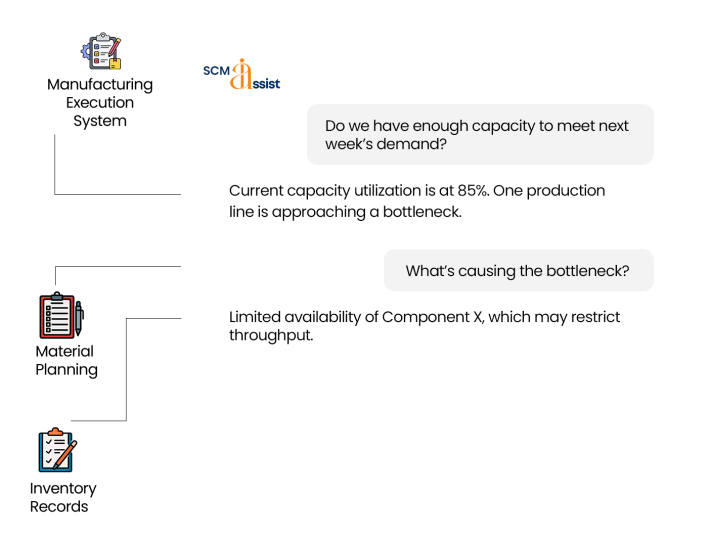
Predict capacity and production constraints
- Capacity utilization analysis
- Production bottleneck detection
- Material availability visibility
- Network-level constraint monitoring
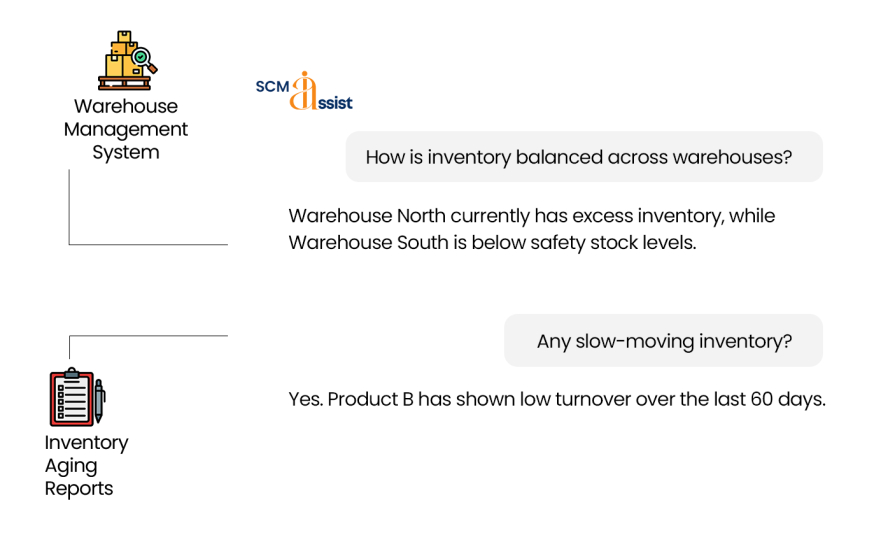
Real-time inventory balance across the network
- Safety stock optimization
- Excess and slow-moving inventory detection
- Shelf-life and obsolescence monitoring
- Materials availability tracking
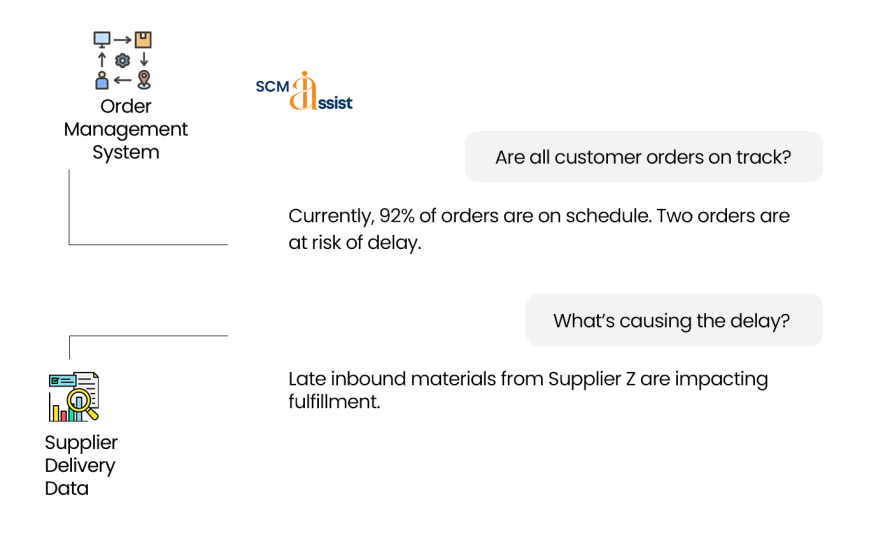
Improve order fulfillment reliability
- End-to-end order visibility
- Commit reliability monitoring
- Delivery performance tracking
- Service exception identification
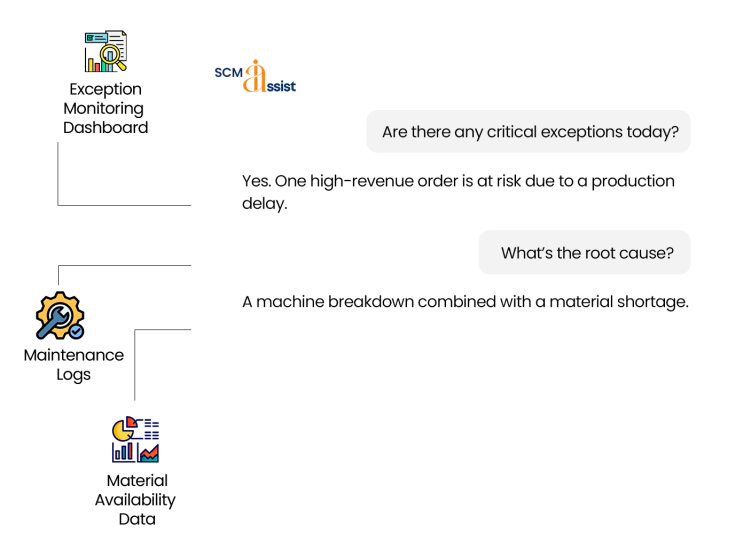
Resolve exceptions before they escalate
- Exception prioritization by revenue and service risk
- Cross-domain root cause correlation
- Guided resolution recommendations
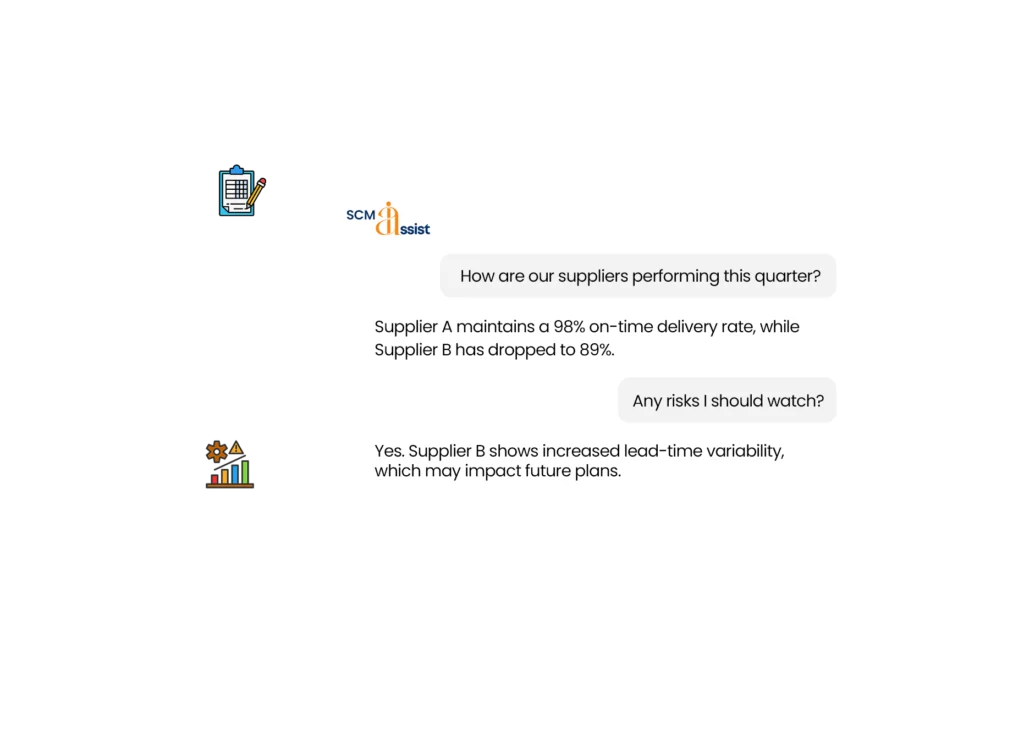
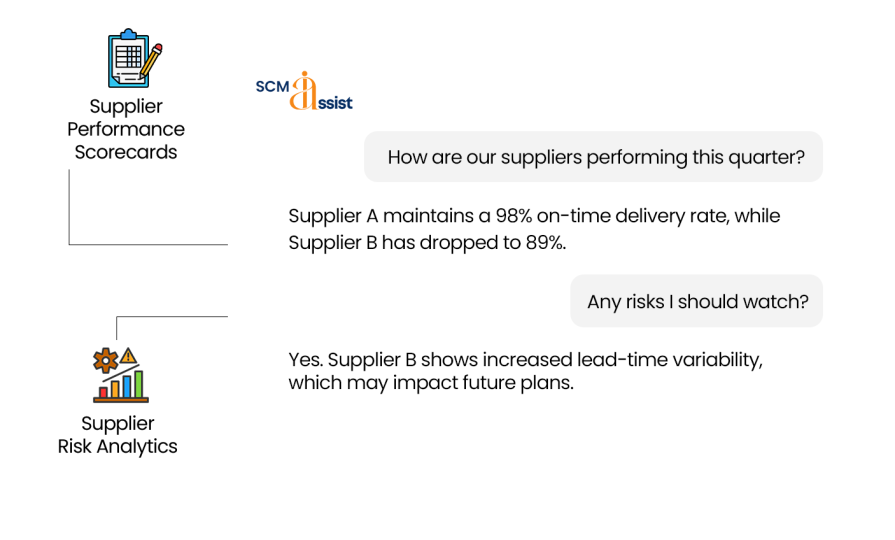
Monitor supplier and partner performance
- Supplier performance visibility
- Partner risk monitoring
- Contract manufacturer coordination
- Logistics execution tracking
Built for enterprise supply chains
Designed for high-volume operational data
Role-based access across planning and execution teams
End-to-end traceability across demand, supply, and inventory
Supports multi-plant and multi-region operations
Works across internal and partner networks
Fits into existing enterprise architectures
Integrations
40-50%
reduction in manual SAP → Excel → email workflows
30-45%
faster scenario and data modeling cycles
20-25%
fewer ad-hoc IT reporting requests
20-30%
reduction in margin leakage through earlier risk detection
10-20%
improvement in cash-flow predictability
20-30%
improvement in inventory turns for priority SKUs
- Case studies
Proven Success with Enterprise Clients

Inside a Pharma Giant’s Shift to AI-Powered Supply Chain Planning
A global pharmaceutical company introduced AI-driven demand forecasting, inventory optimization, and scenario analysis to manage SKU complexity and demand volatility—enabling planners to simulate changes and trigger actions directly from Microsoft Teams.

Frequently Asked Questions (FAQs)
It helps teams deal with poor visibility across suppliers, inventory, and logistics, along with delayed responses to disruptions. Many supply chain issues are known too late. AI helps surface them earlier and reduce manual coordination.
It helps track exceptions, summarize supply chain data, highlight delays or shortages, and support faster decision-making. Teams spend less time chasing updates and more time resolving issues.
Yes. AI can spot early signals of delays, demand shifts, or supplier risks and help teams respond faster before problems impact customers or operations.
No. The AI assistant works with current systems like ERP, planning tools, and logistics platforms, improving visibility and coordination without replacing them.
AI helps bring together demand signals, inventory levels, and supply constraints to highlight imbalances early. This supports better planning and reduces stockouts or excess inventory.
No. AI supports teams by providing insights and recommendations. Supply chain leaders and planners remain in control of decisions and actions.
AI can highlight trends in supplier performance, flag potential risks, and surface contract or delivery issues early, helping teams take proactive action.
Yes. Enterprise-grade AI assistants follow strict security and access controls to keep supply chain data protected and compliant.
Teams often see improvements quickly in areas like exception response time, planning accuracy, and visibility across the supply chain, especially where manual effort is high.
Look for a solution that integrates with existing systems, improves visibility across suppliers and inventory, reduces manual work, and helps teams respond faster to change.