

















Reduce turnaround time across contract reviews, investigations, and approvals
Apply legal standards uniformly across contracts, policies, and entities.
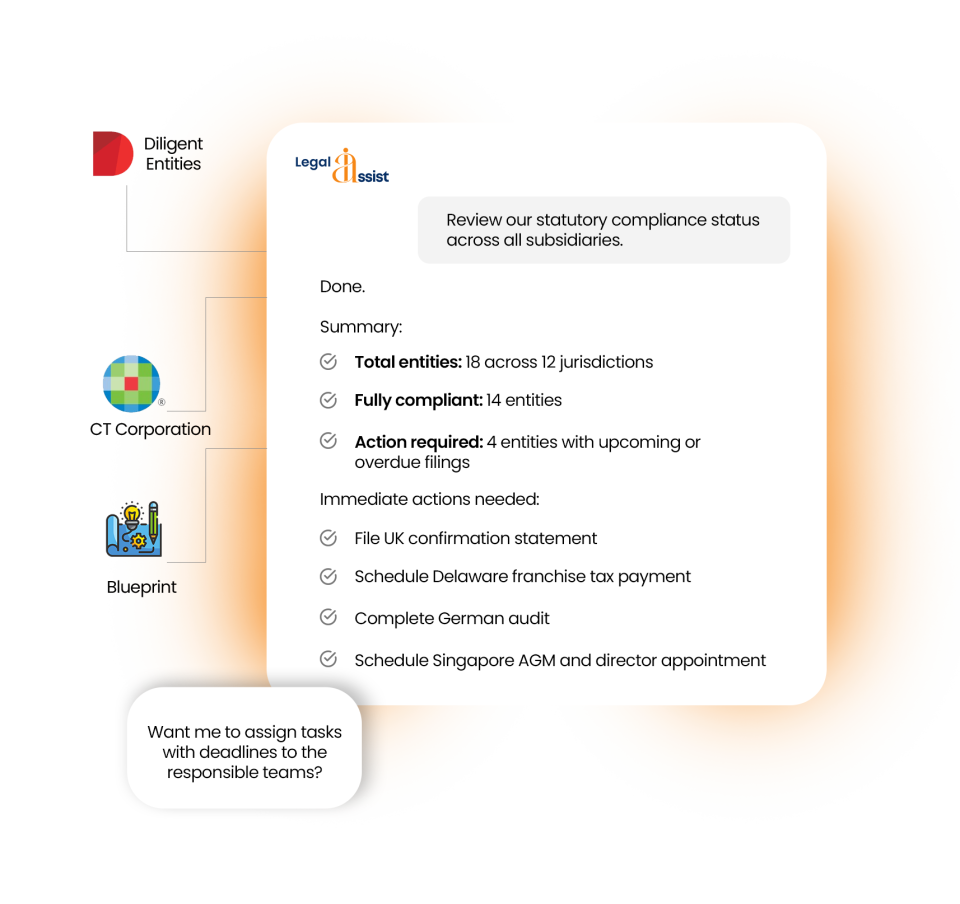
Maintain a consolidated view of obligations, exposure, and governance across the enterprise.
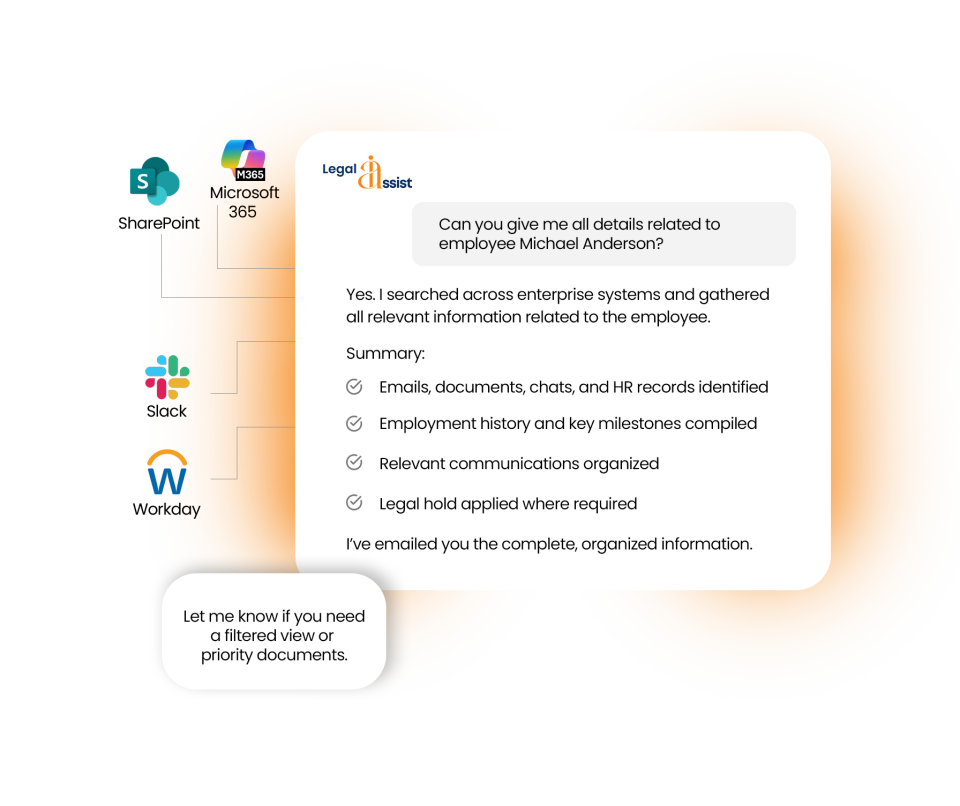
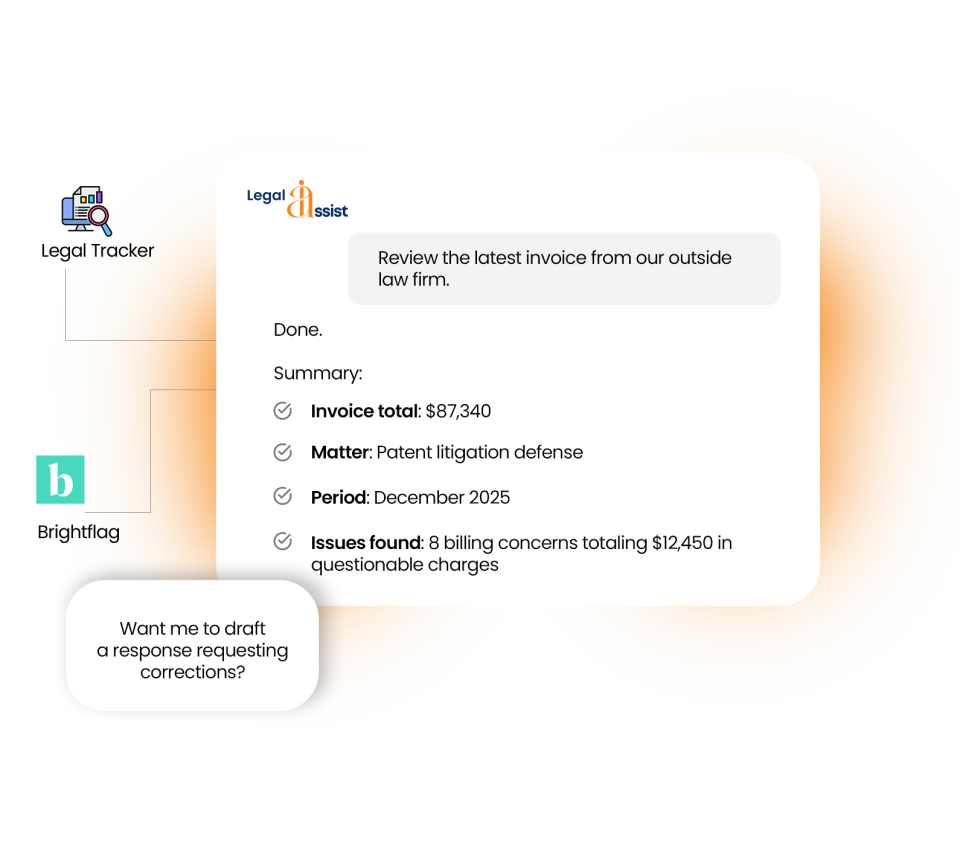
It helps reduce manual work like searching documents, summarizing case files, drafting standard language, and finding relevant references. This gives legal professionals more time to focus on complex judgment and strategy.
It can quickly find relevant clauses, summarize long documents, suggest language for contracts, and help answer legal questions using information from your systems — without having to read everything manually.
AI is designed to support legal teams by handling time-consuming research and routine tasks, helping professionals work more efficiently. Legal judgment, accountability, and decision-making continue to rest fully with qualified legal experts.
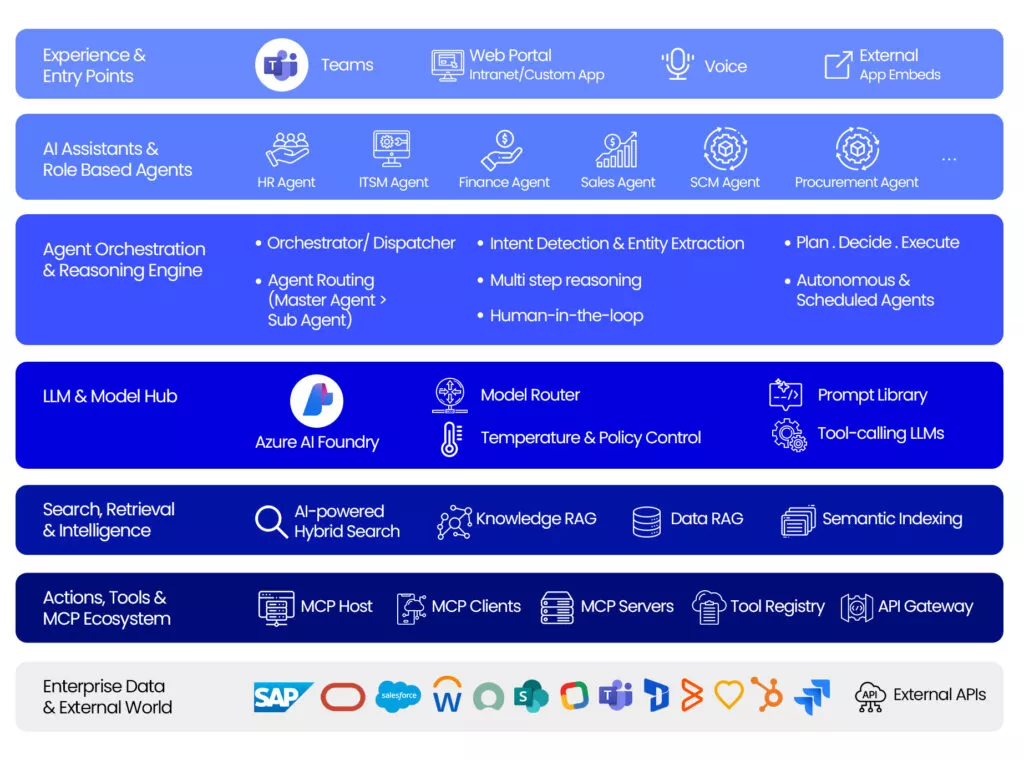
Yes. A legal AI assistant can work with the systems you already use for contracts, case files, research repositories, and knowledge bases. You don’t have to replace your tools to benefit from it.
It can flag clauses that may pose risk, help teams stay updated on regulatory changes, and assist in tracking compliance requirements. This makes compliance work more consistent and easier to manage.
By highlighting key clauses, identifying missing terms, summarizing redlines, and suggesting alternatives, AI helps speed up the review process without lowering quality.
Yes. Enterprise-grade AI assistants follow security and access control policies so that only authorized people can see sensitive information and data stays protected.
Many teams experience value quickly in their document review, research, and compliance work — especially where they are spending a lot of time on repetitive tasks.
Yes. It can surface relevant cases, clauses, regulations, and interpretations based on your context, helping legal teams find answers faster and with less effort.
Look for something that: