

















AI Assistants
/
IT Service Management
Resolve IT tickets faster with an AI helpdesk agent
Lower cost per ticket, improve response clarity, and elevate employee support experience with our IT Helpdesk AIssist built on Saxon’s Enterprise AI platform
Keep IT support running smoothly at scale
Reduce routine ticket volume
Handle common IT requests without manual intervention.
Improve response speed and consistency
Ensure faster, predictable resolution across issues.
Maintain visibility and control
Give IT leaders a clear view of ticket health and demand.
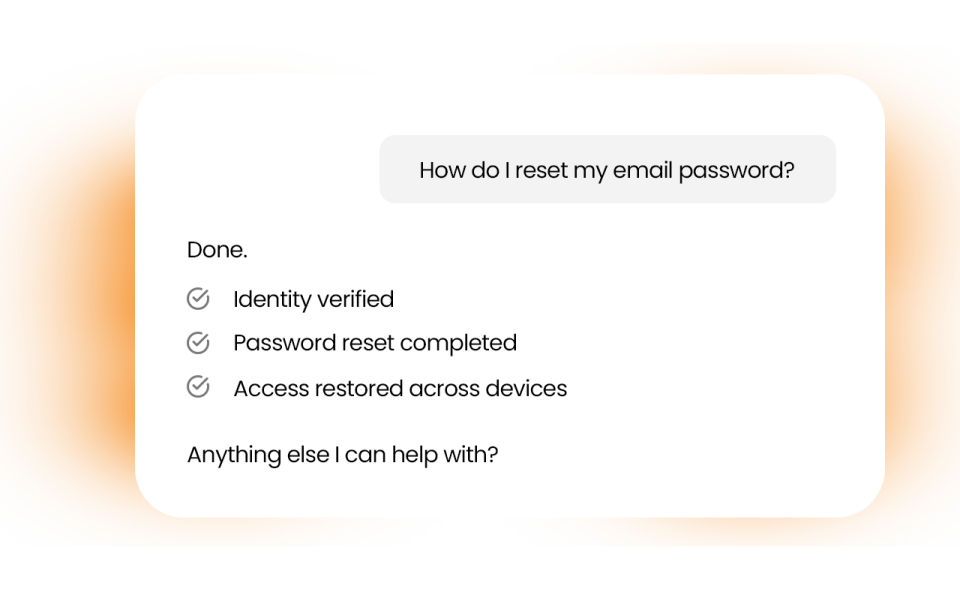
Resolve common IT requests automatically
- Password resets, access requests, device and application issues
- Pre-built workflows executed consistently
- Reduced L1 ticket volume
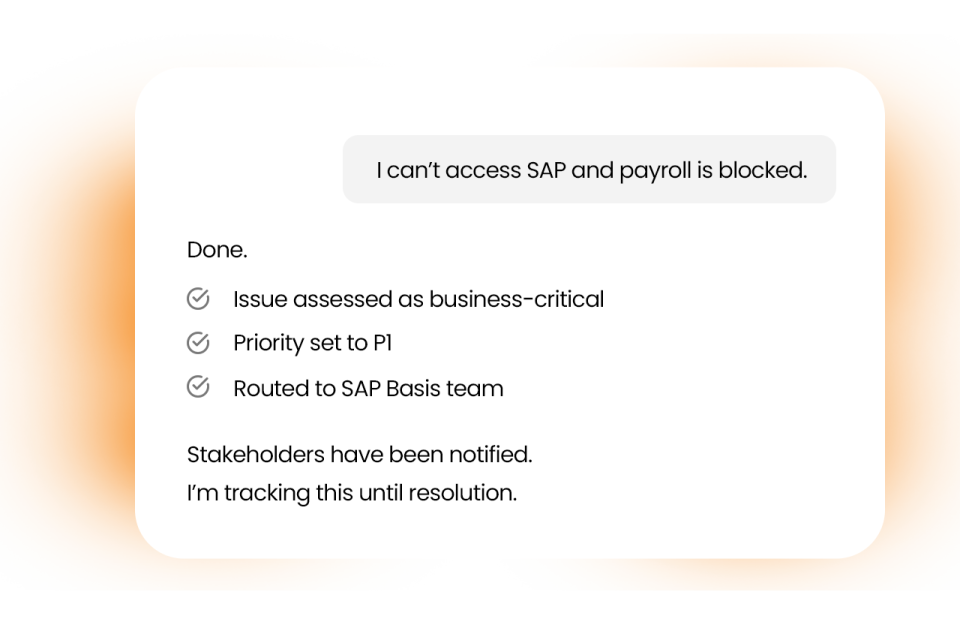
Route and prioritize tickets intelligently
- Automatic classification and urgency detection
- Faster assignment to the right teams
- Improved SLA adherence
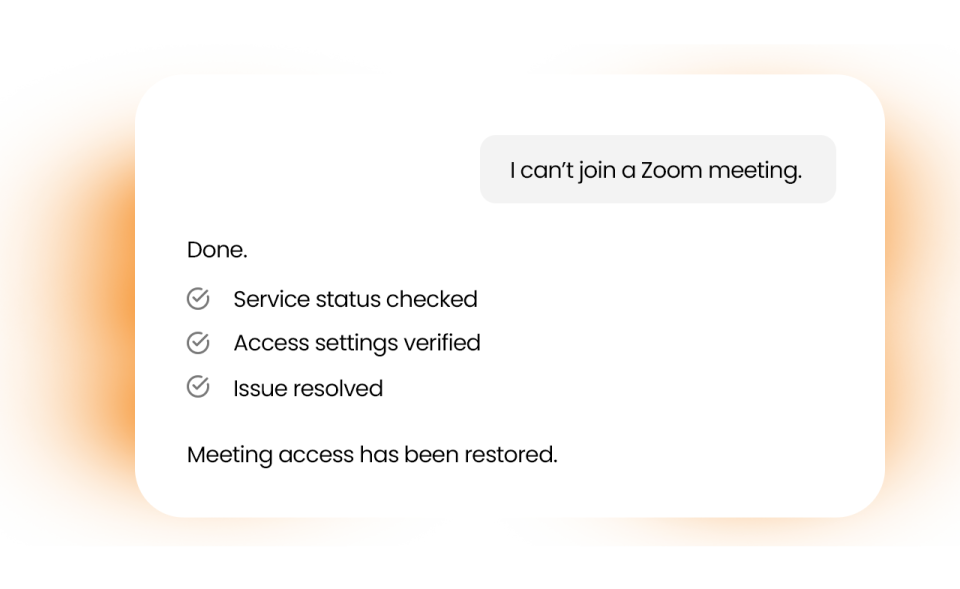
Enable conversational self-service
- Natural-language support in Teams and Slack
- No new portals or tools for employees
- 24×7 availability
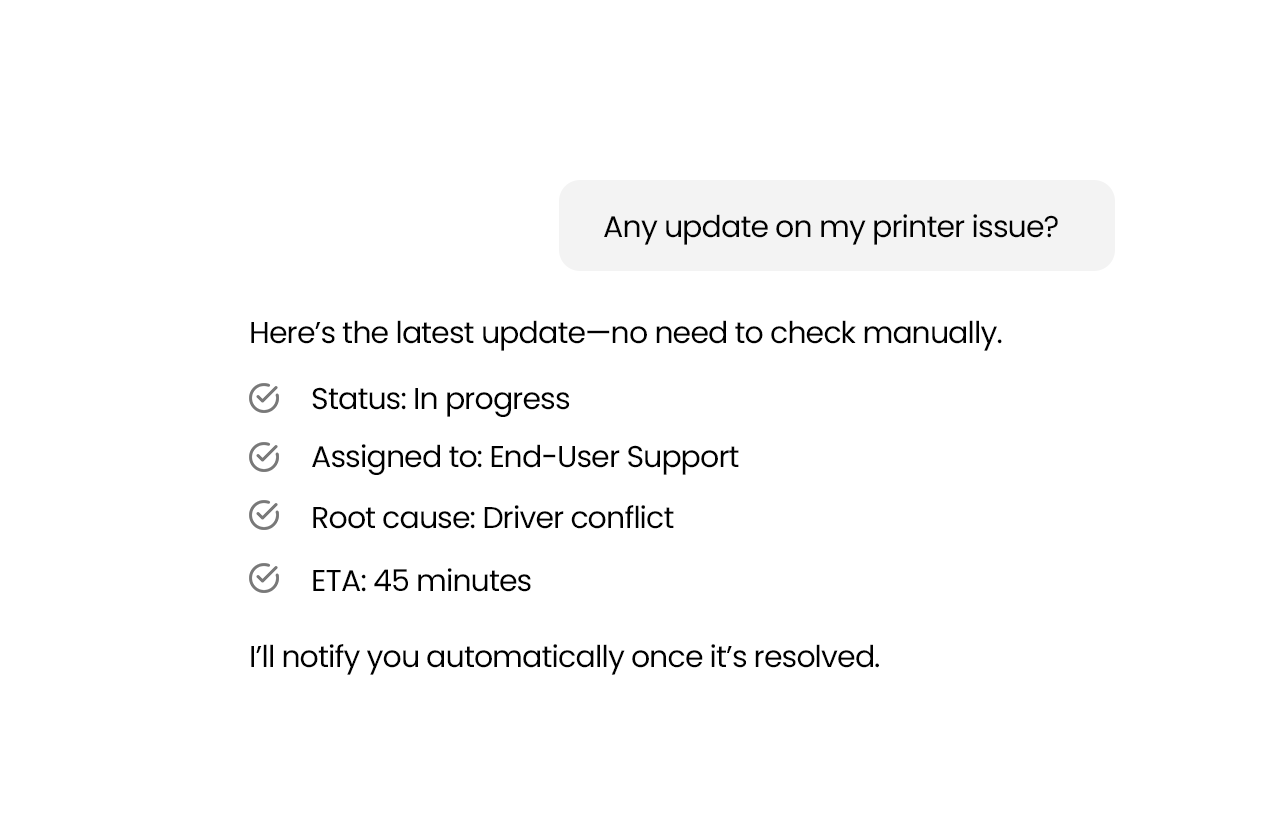
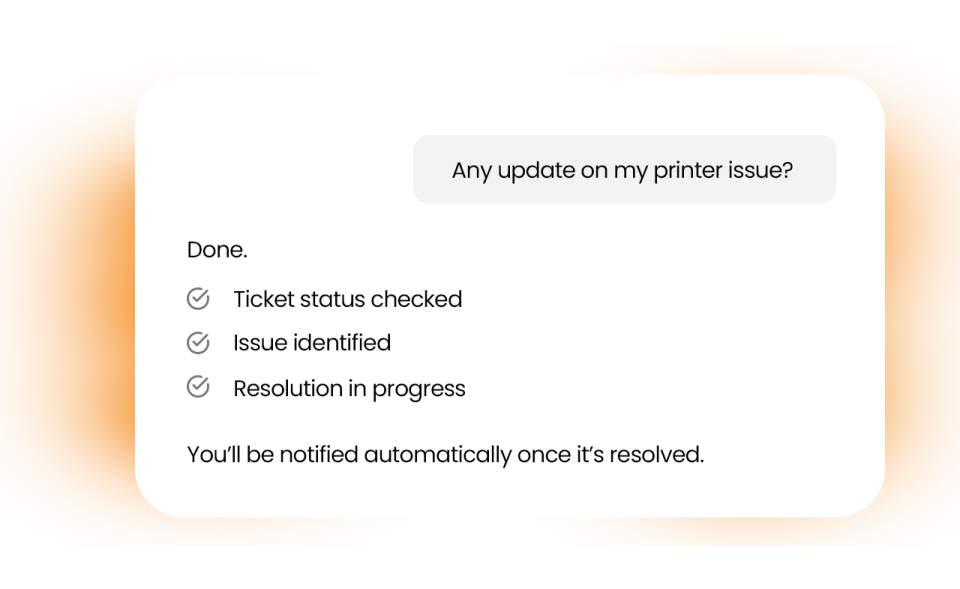
Proactively update users on ticket status
- Real-time notifications and follow-ups
- Fewer “status check” requests
- Better employee experience
Support global teams without adding headcount
- Always-on coverage across time zones
- Seamless escalation to human agents
- Scales with demand
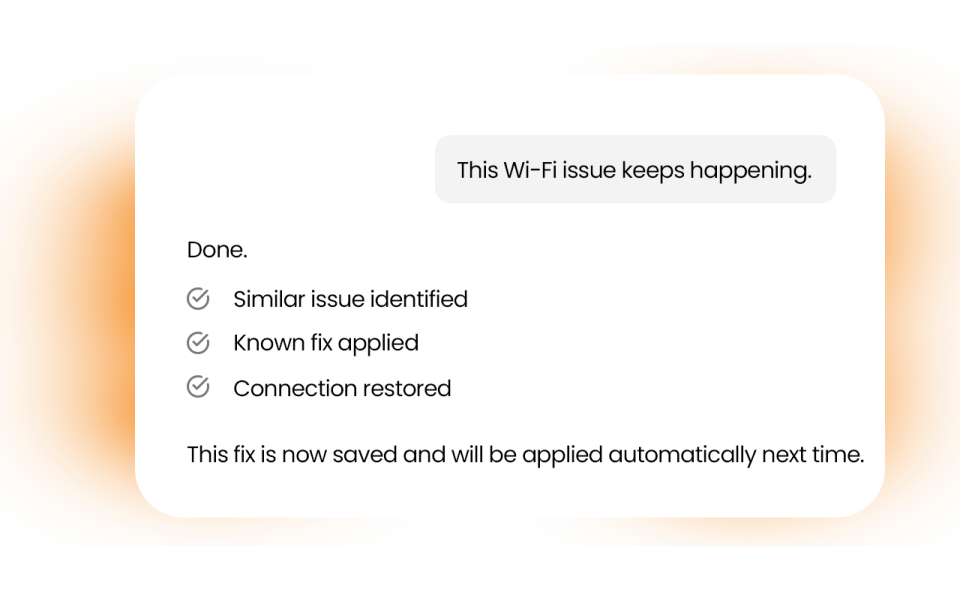
Reuse knowledge across resolutions
- Answers grounded in enterprise knowledge bases
- Faster resolution of repeat issues
- Continuous learning from past tickets
Built for Enterprise IT
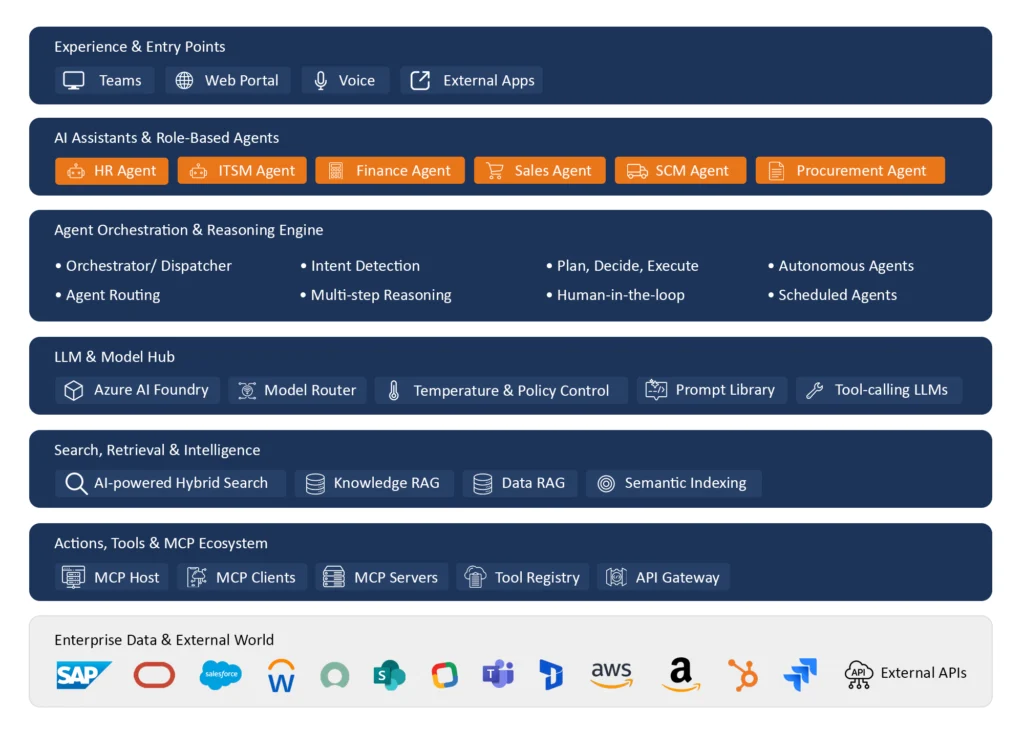
Role-based access and ITSM platforms
Role-based access and secure integrations
Full auditability of actions and responses
Designed for global, multi-tier IT support
Fits into existing IT workflows
Enterprise-grade governance
Integrations
- Case studies
Proven Success with Enterprise Clients

Faster IT Support with an AI-Driven Helpdesk for a Large Enterprise
AI-powered ticket routing, SLA enforcement, and real-time dashboards streamline IT support operations and improve user experience. -> https://saxon.ai/case-study/it-support-transformation/

Teams-Based IT Support Automation for a Construction Enterprise
IT support requests are handled directly within Microsoft Teams, enabling faster responses, better visibility, and reduced operational overhead. -> https://saxon.ai/case-study/it-support-management-automation-for-construction-leader/
Frequently Asked Questions (FAQs)
It helps reduce repetitive support work like answering common IT questions, troubleshooting routine issues, and tracking ticket updates. This lets IT teams spend more time on strategic and complex tasks.
It can quickly pull up relevant solutions, draft response suggestions, categorize tickets, and provide consistent answers — so agents spend less time on routine work and more time on higher-impact problems.
No. The AI assistant provides suggestions and information, but IT agents and managers stay in control of decisions, priorities, and final actions.
Yes. It can integrate with tools you already use — such as ticketing systems, knowledge bases, chat platforms, and monitoring systems — without requiring a complete tool replacement.
AI can quickly surface relevant answers and guide agents with suggested responses. This leads to faster resolutions, fewer repetitive back-and-forth responses, and better support experiences for users.
Yes. Enterprise-grade AI assistants follow strong security and access controls, so IT data and user information stay protected and accessible only to authorized people.
Teams often see improvements quickly in areas such as shorter response times, reduced manual effort, and better ticket categorization — especially when there are high volumes of routine tickets.
Yes. An AI assistant can help new agents by suggesting answers, providing context from past tickets, and guiding them through common resolutions, reducing training and ramp-up time.
Not necessarily. The AI assistant works with your current workflows and tools. It enhances how helpdesk teams work today without forcing major process changes.
Look for a solution that:
- integrates with your current tools,
- reduces repetitive work,
- improves response time and consistency,
- and helps agents focus on complex and strategic support.